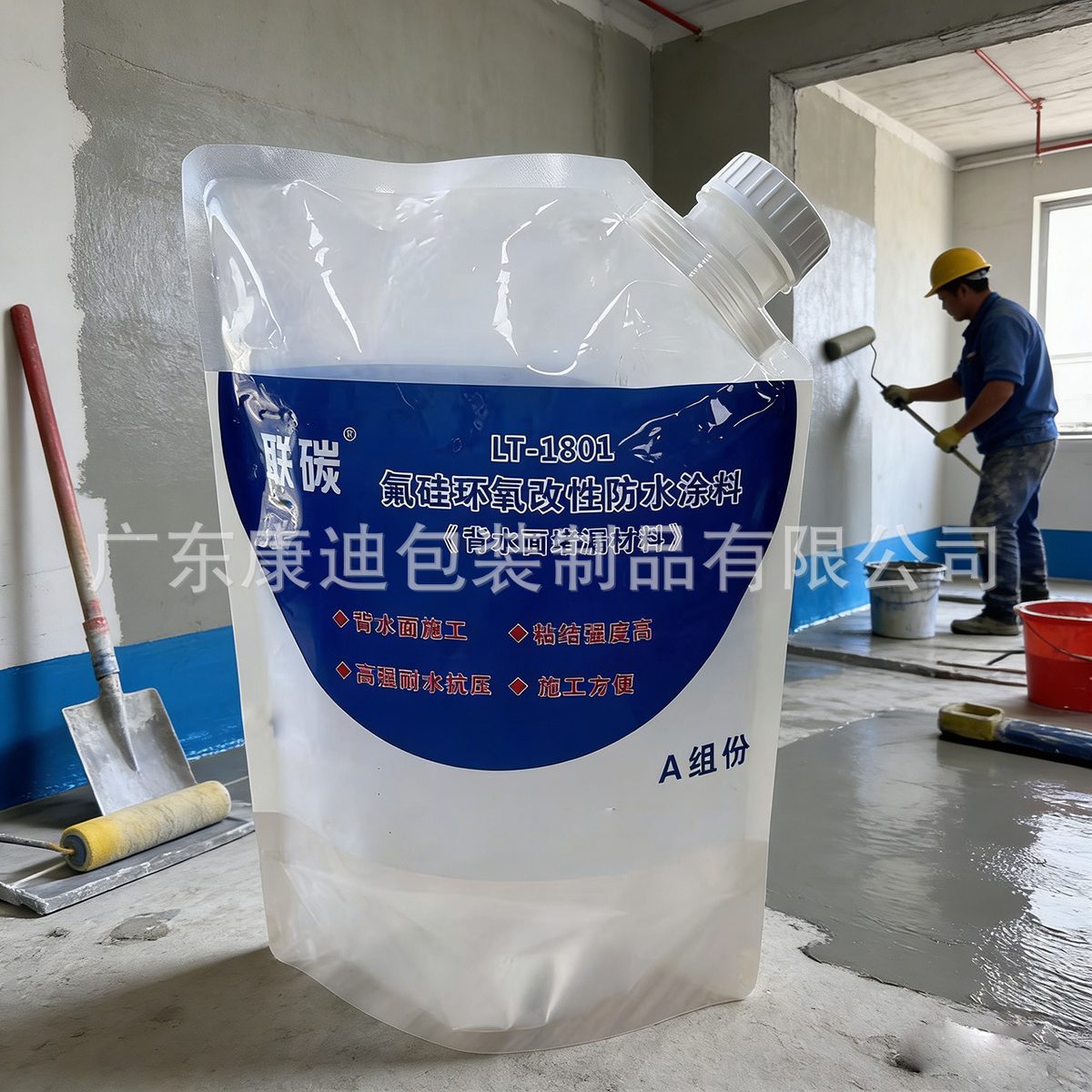
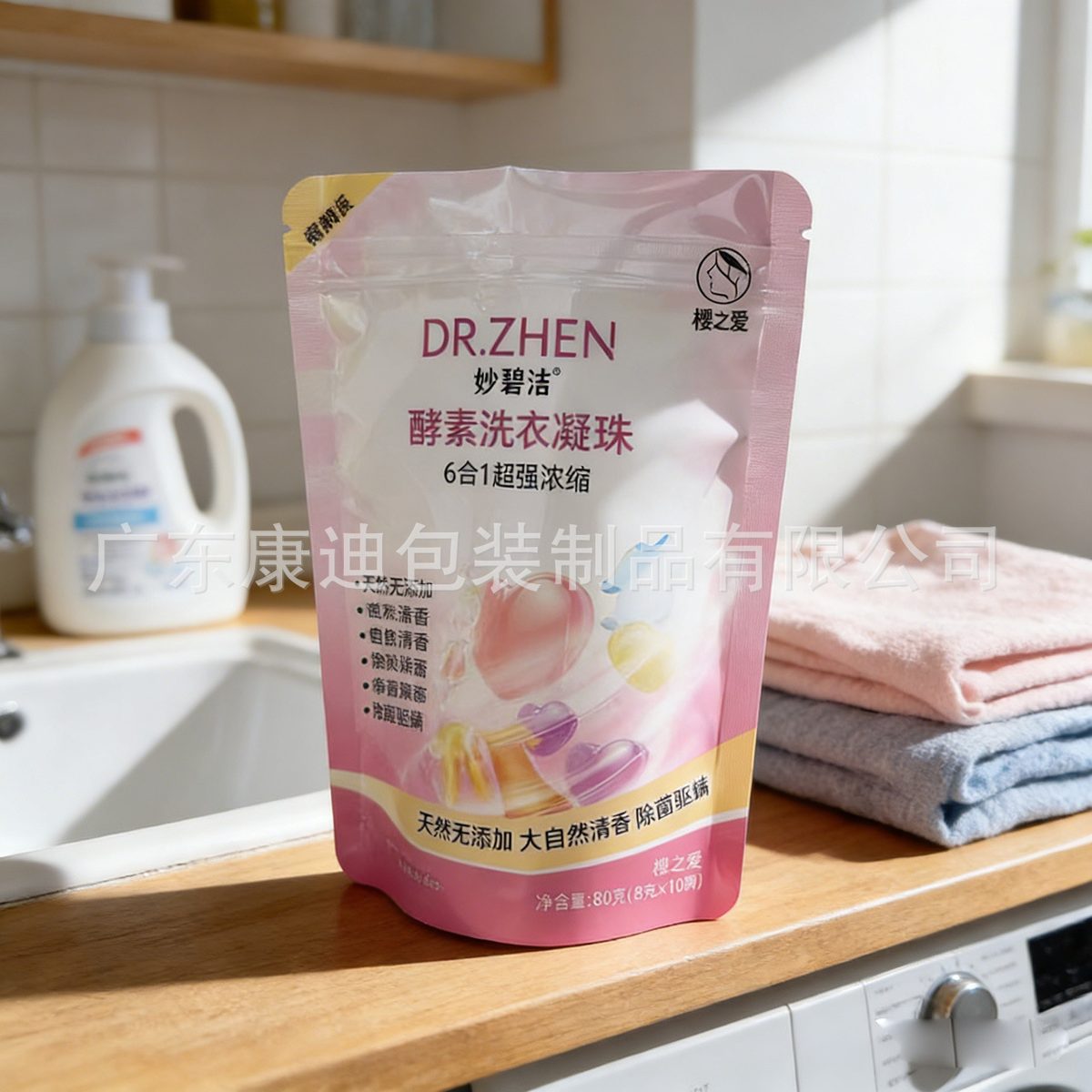
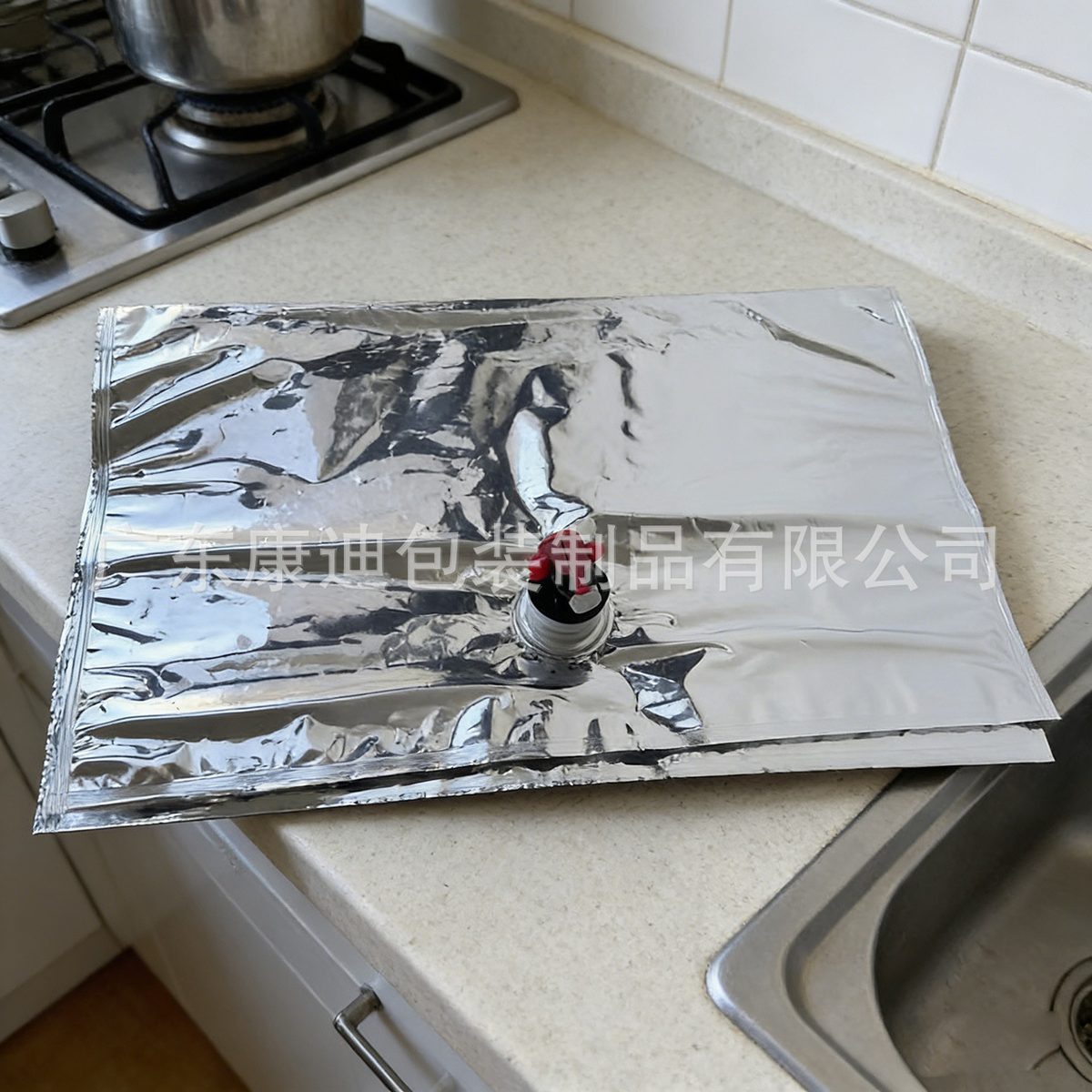
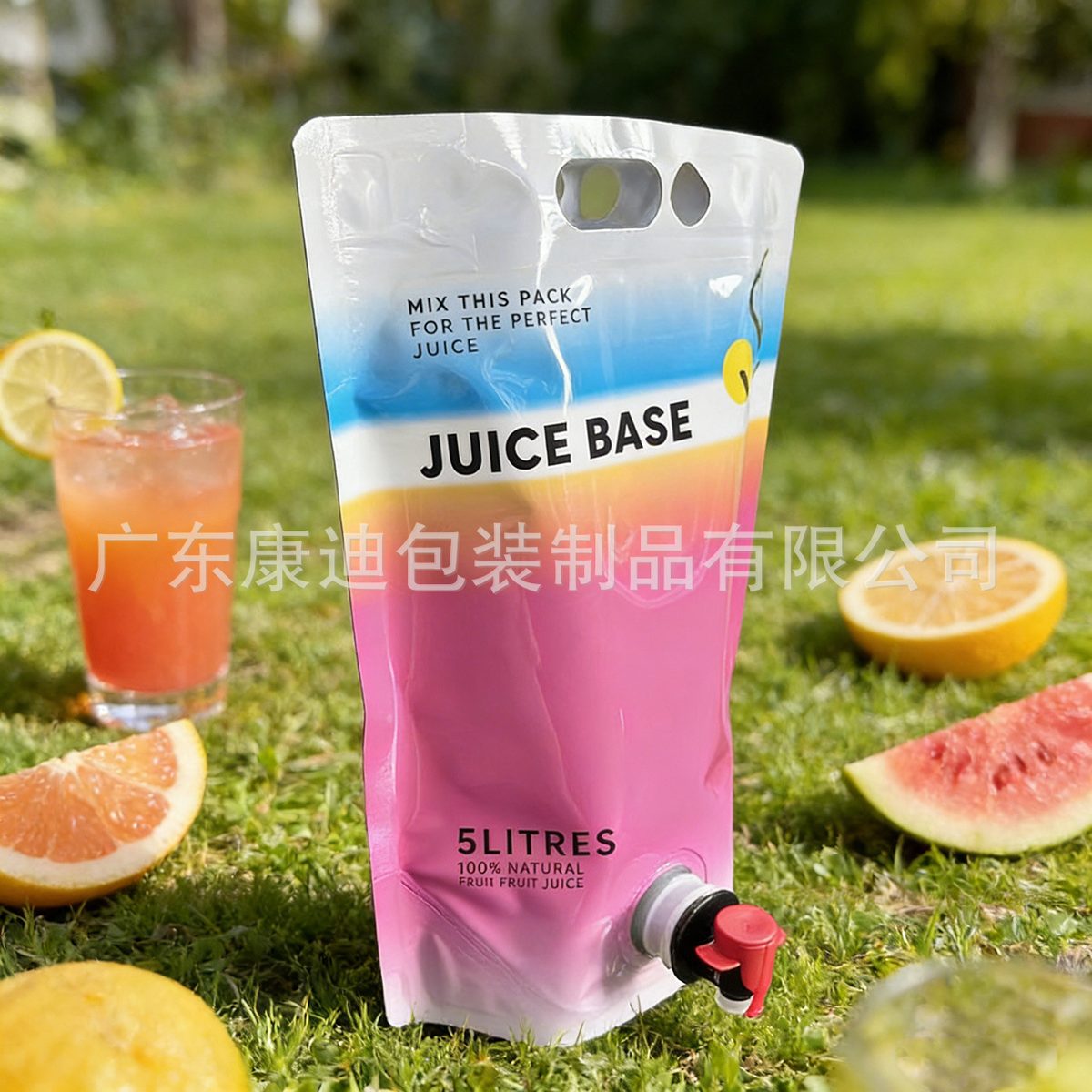
Built for ammonia- and alcohol-based glass cleaners, this zipper pouch runs a PET/VMPET/PE laminate with a solvent-resistant PE sealant, or a PET/AL/PE build when a formula needs a tighter oxygen and light barrier. The metallized or foil core keeps active ingredients stable and limits odor transfer in storage, while the 100–140 micron wall gives the pouch enough body to stand on a shelf and survive case-packed palletizing. Both builds are available in food-contact and industrial grades of film, and the sealant layer is selected to resist stress cracking from surfactants and IPA blends. Share the formula's solvent load and pH, and we will recommend laminate and sealant thickness.
The pouch fills through a wide top zipper, then closes on a press-to-close track that lets end users reopen, refill and reuse the bag instead of discarding it after one trip. A welded spout fitment — 16 mm, 20 mm or 32 mm, or a dispensing valve — sits on the top gusset for controlled pouring into spray bottles and trigger heads. Decoration is 10-color rotogravure on reverse-printed PET, so brand color, dilution charts, UPC and safety text stay sharp under gloss or matte varnish. We print eye-marks and registration marks for automatic filling lines.
MOQ starts at 10,000 printed pouches per SKU, with unprinted stock often available at lower volume for market tests. Sampling runs in two stages: a plain-structure pouch for fill, drop and compatibility checks, then a printed pre-production pouch from the production gravure cylinders — roughly 7–10 working days for the first and 12–15 for the second, with cylinders retained for reorders. Production lead time is 18–25 days after artwork approval, shipped FOB Shenzhen or Hong Kong with consolidation options for East Coast buyers. Our 15,000 m² Dongguan workshop handles film, printing, lamination and fitment welding in-house, and we can supply film and fitment combinations for UN transport-mark qualification testing through your third-party lab.